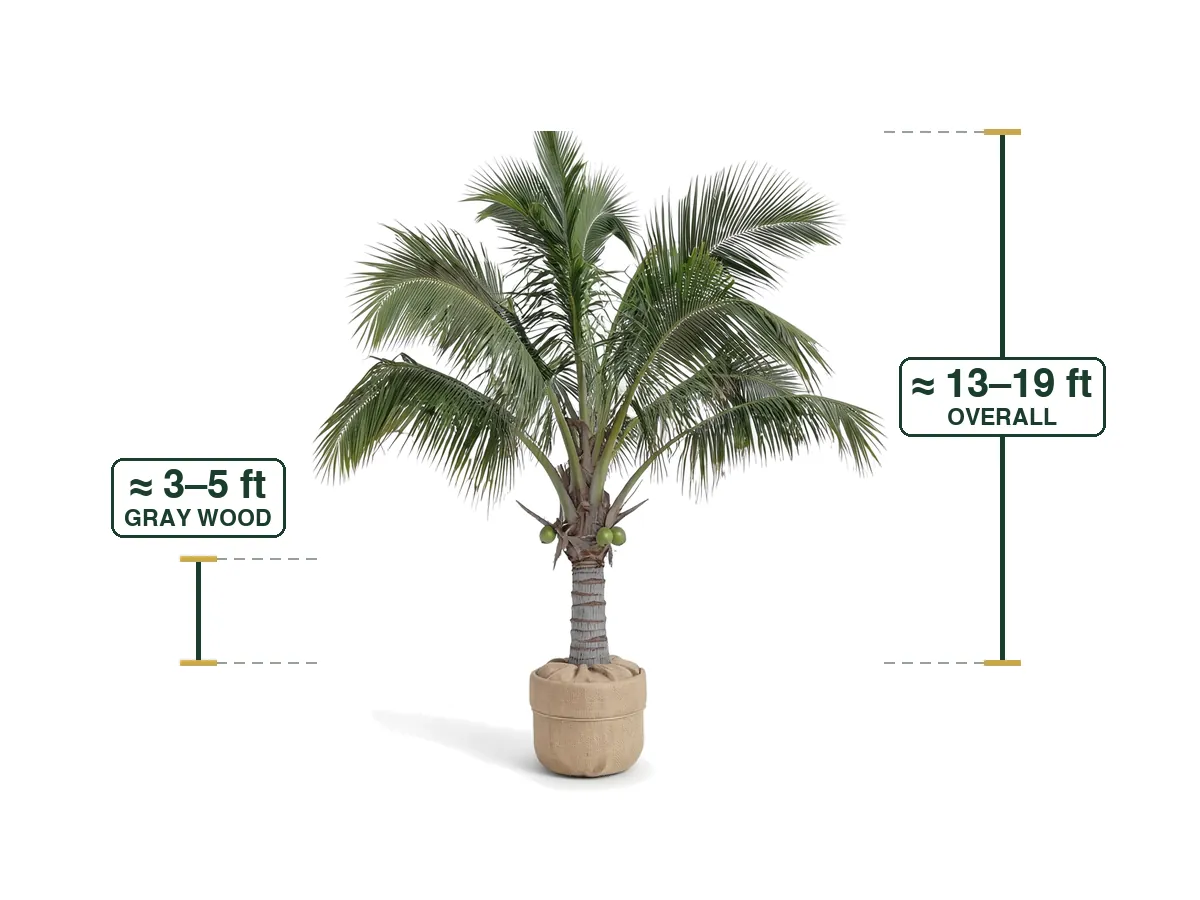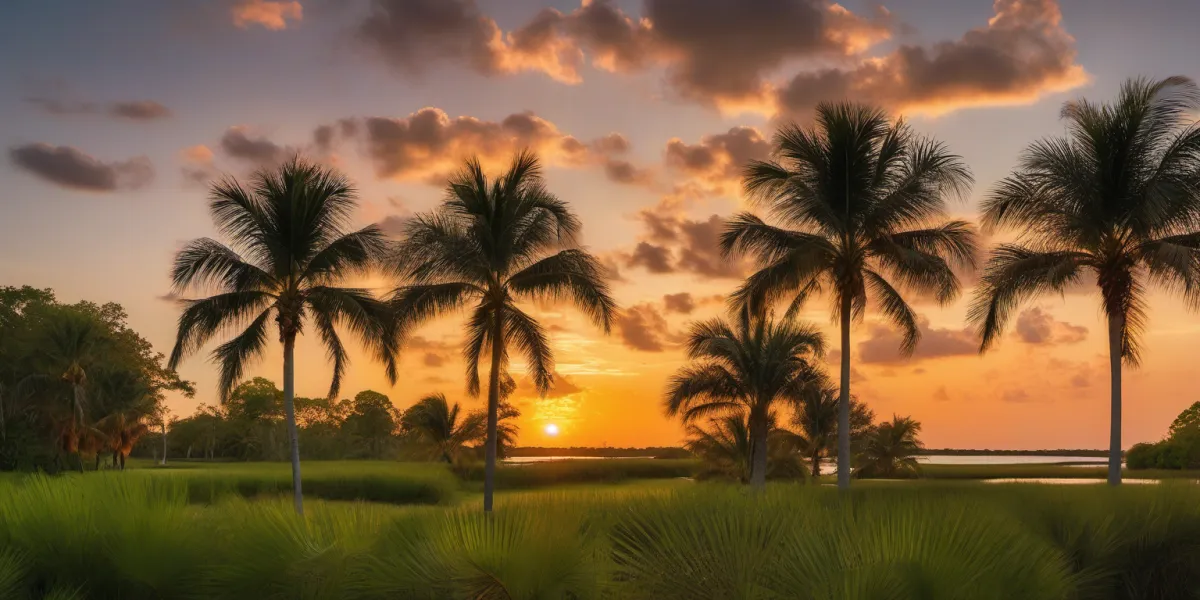
Growing a coconut palm in your Florida yard is the ultimate tropical dream, and in the right location, it is absolutely achievable. Coconut Palms (Cocos nucifera) thrive in South Florida's warmest zones and can produce real, full-size coconuts within a few years of planting.
Where Can Coconut Palms Grow in Florida?
Coconut Palms are only reliably hardy in USDA Zones 10b-11a, which limits them to South Florida: Miami-Dade, Broward, Palm Beach, Collier, Lee, and Monroe counties. Even within these zones, coastal areas outperform inland areas because of warmer nighttime temperatures. A hard freeze (below 32°F for extended hours) can kill a coconut palm.
- ✓Zone 11a (Keys, Miami Beach): Ideal, virtually no freeze risk
- ✓Zone 10b (Miami, Fort Lauderdale, Naples): Excellent, rare cold damage
- ✓Zone 10a (Cape Coral, Sarasota, Tampa coastal): Marginal, protect during freezes
- ✓Zone 9b and colder: Not recommended, too much freeze risk
Best Coconut Palm Varieties for Florida
Lethal yellowing disease devastated Florida's original Jamaica Tall coconut palms in the 1970s-90s. Today, only disease-resistant varieties should be planted:
- ✓Malayan Dwarf (Green or Golden): Most disease-resistant, compact to 40 ft, excellent for residential
- ✓Maypan: Hybrid of Malayan Dwarf x Panama Tall, disease resistant, to 60 ft
- ✓Fiji Dwarf: Very disease resistant, compact, slower growing
- ✓Do NOT plant Jamaica Tall, highly susceptible to lethal yellowing
Planting and Care
- ✓Light: Full sun, at least 8 hours direct sun daily
- ✓Soil: Well-draining sandy soil, never plant in areas that hold standing water
- ✓Watering: Regular water during establishment, drought tolerant once mature
- ✓Fertilizer: Palm-specific 8-2-12 formula, 3-4 times per year
- ✓Spacing: Plant at least 15 feet from structures, falling coconuts cause damage
- ✓Salt tolerance: Excellent, one of the best palms for beachfront properties
When Will My Coconut Palm Produce Coconuts?
A Malayan Dwarf planted from a 15-25 gallon container will typically begin flowering in 4-6 years and producing mature coconuts in 6-8 years. A field-grown specimen with an established trunk may produce coconuts within 2-3 years of planting. Once producing, a healthy coconut palm yields 50-200 coconuts per year.
Safety Tip: Falling coconuts weigh 3-5 pounds and drop from 30-60 feet. Never plant a coconut palm directly over a patio, driveway, or area where people sit or park. Hire a professional to remove coconuts before they mature if the palm is near a structure.
Lethal Yellowing Disease
Lethal yellowing (LY) is a phytoplasma disease spread by planthoppers that kills susceptible coconut palms within months. Symptoms include premature nut drop, blackening of flower stalks, and progressive yellowing of fronds from bottom to top. There is no cure, only preventive injection with oxytetracycline antibiotics, which must be repeated every 4 months indefinitely. The best prevention is planting resistant varieties.
Want to add a coconut palm to your South Florida property? Florida Palm and Plant Co. carries disease-resistant Malayan Dwarf and Maypan coconut palms. Call (239) 799-5594.