Southwest Florida sits squarely in hurricane alley. After Ian in 2022 ripped through Cape Coral and Lee County, homeowners learned a hard lesson: your plant choices determine how much you're replanting after every storm season.
The good news is that many of Florida's most beautiful plants are also among its most storm-resilient. Here's what survived Ian with minimal damage, and what didn't.
Why Some Plants Survive Hurricanes and Others Don't
Wind resistance in plants comes down to three factors: root depth, trunk flexibility, and canopy density. Trees with brittle wood, shallow roots, or large flat canopies catch wind like a sail and topple. Plants with deep root systems, flexible stems, or naturally sparse canopies bend rather than break.
Best Hurricane-Resistant Trees for SW Florida
Gumbo Limbo Tree
Called the "tourist tree" for its peeling red bark, the Gumbo Limbo is arguably the most hurricane-resistant tree in Florida. Its flexible wood bends dramatically in high winds without snapping. Native Floridians have been planting these for generations specifically because they survive storms.
- ✓Extremely flexible wood, bends without breaking
- ✓Deep root system anchors it firmly in sandy soils
- ✓Native to Florida, naturally adapted to the climate
- ✓Fast-growing shade tree reaching 25-40 feet
- ✓High salt tolerance, ideal for coastal and canal lots
Live Oak Tree
The Live Oak is Florida's native champion of storm resistance. Its low, spreading canopy and extraordinarily deep root system make it nearly impossible to uproot. Live Oaks that survived hundreds of storms are still standing across SW Florida.
- ✓Massive root system, virtually impossible to uproot when established
- ✓Low center of gravity from its wide spreading canopy
- ✓Native species fully adapted to Florida weather patterns
- ✓Provides enormous shade, up to 40 feet wide at maturity
- ✓Long-lived, these trees become permanent landmarks
Hurricane-Resistant Palms
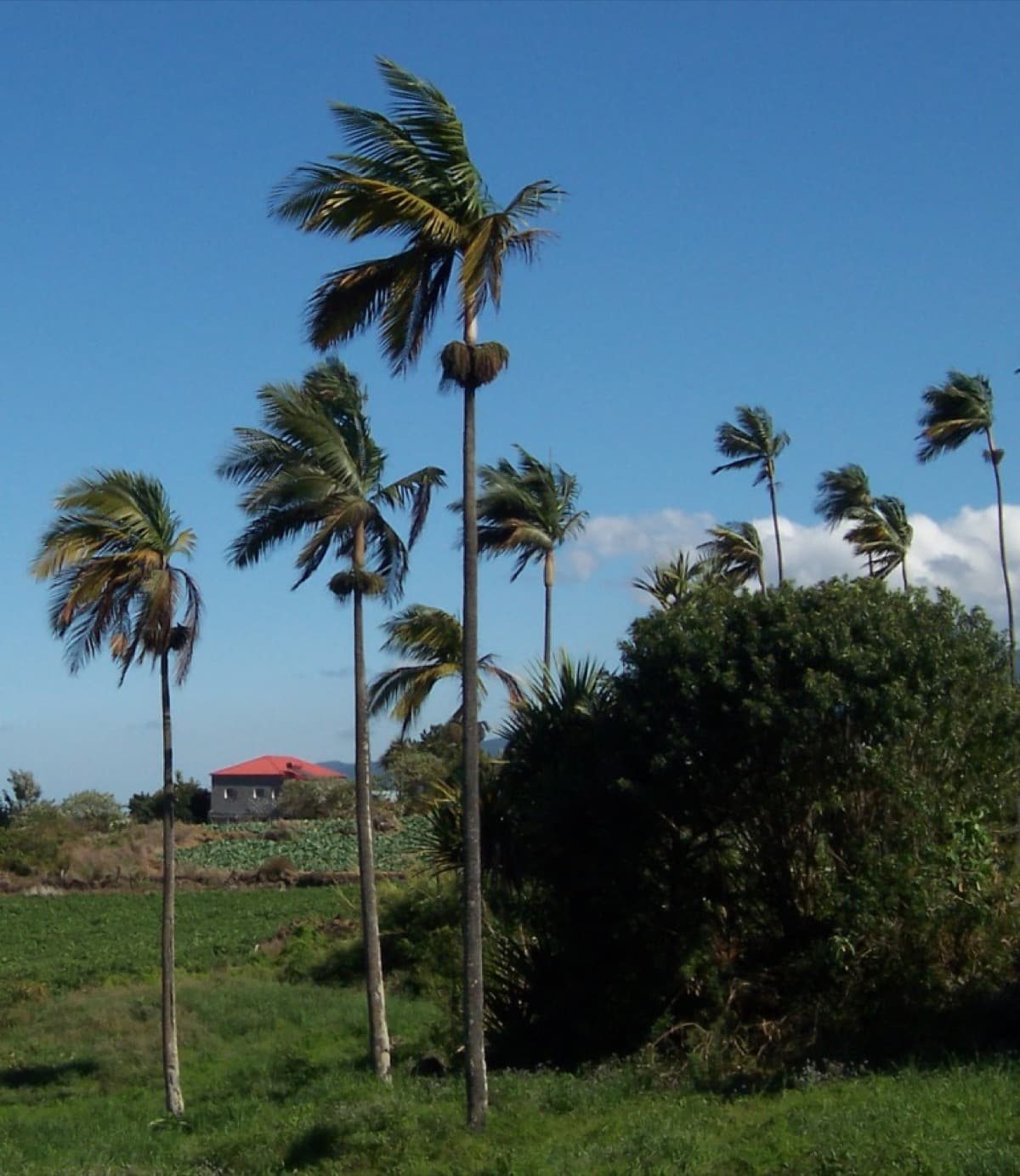
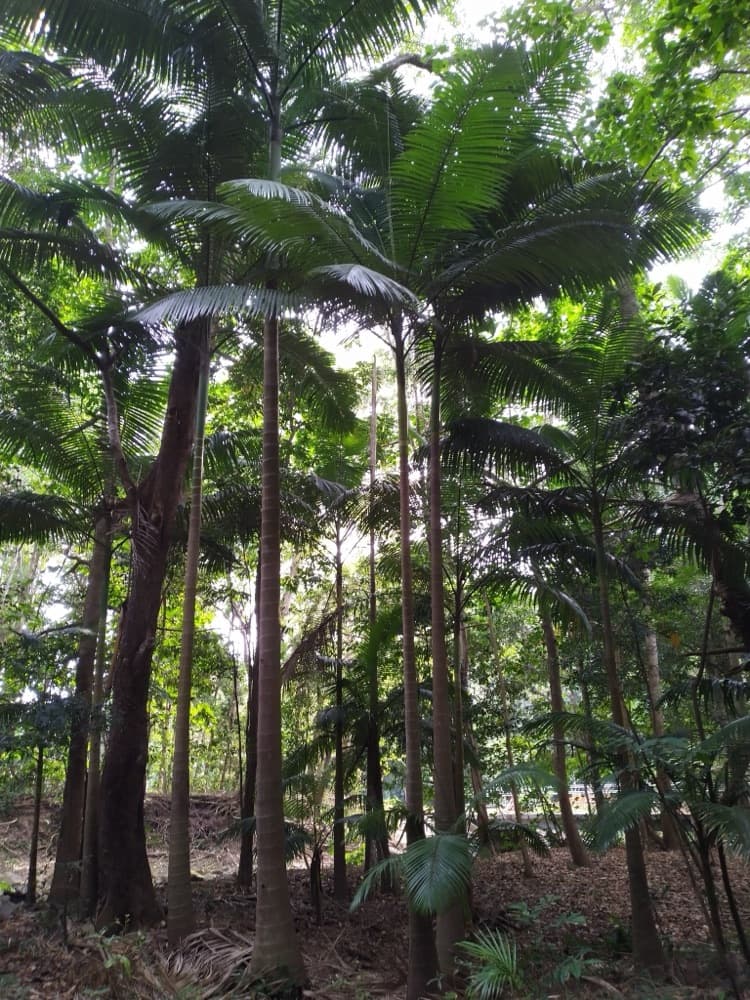
Palms are actually among the most hurricane-resistant plants available because their trunks flex rather than break. A palm can bend 40-50 degrees in high winds and bounce back. However, not all palms are equal.
- ✓Royal Palm: Extremely wind-resistant. The smooth trunk offers minimal wind resistance and flexes dramatically.
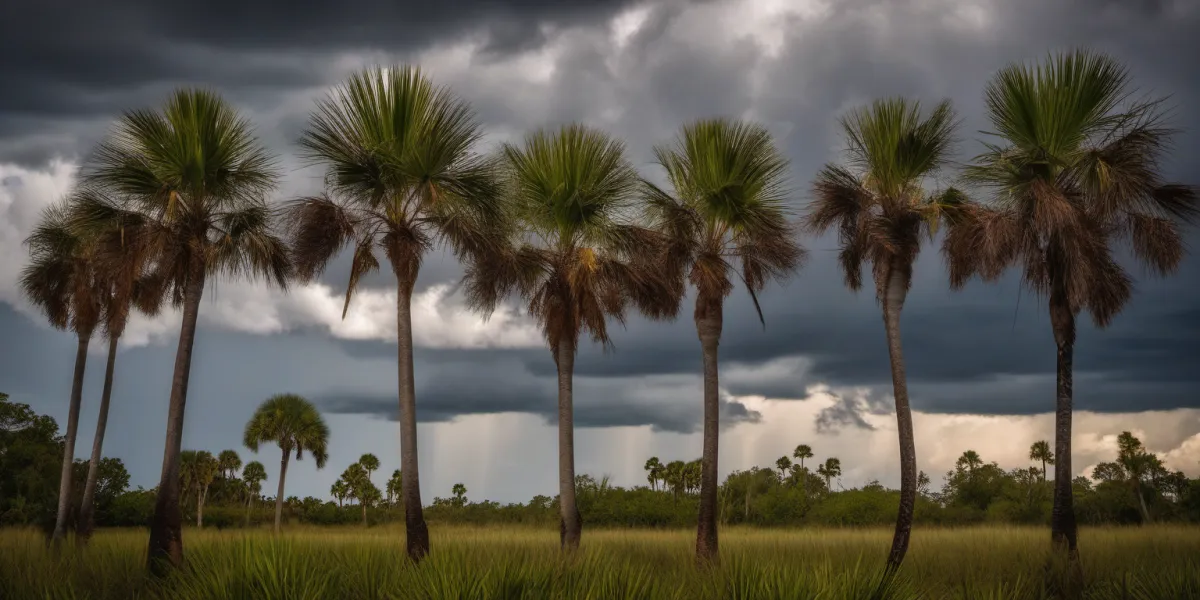
- ✓Sabal Palm (Cabbage Palm): Florida's state tree survives even Category 4 winds routinely.
- ✓Sylvester Palm: Thick trunk and deep root system make it highly wind resistant.
- ✓Queen Palm: More vulnerable than native palms, the feathery fronds catch significant wind. Plant in sheltered locations.
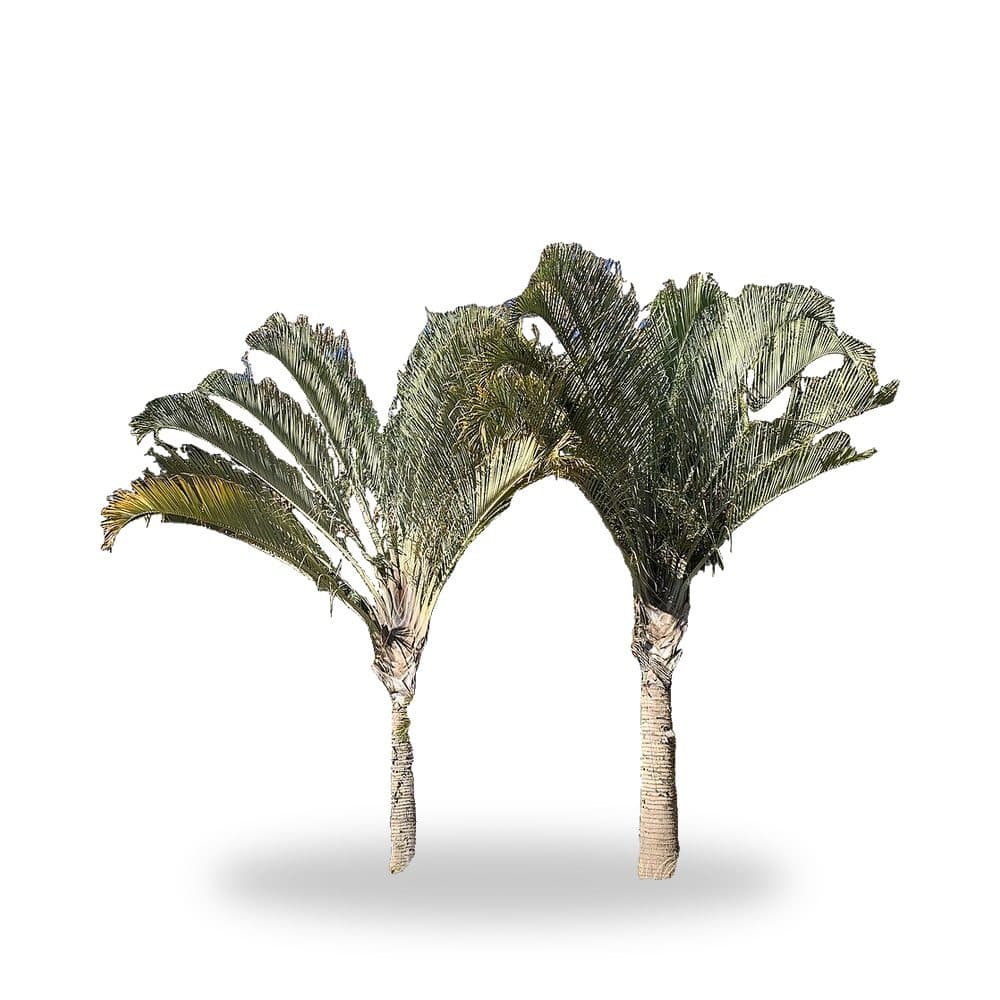
- ✓Foxtail Palm: Moderate hurricane resistance. Fronds may damage but the tree typically survives.
🌀 Hurricane Tip: Never trim your palms into a "hurricane cut" (removing all but the top few fronds). This actually weakens the palm and makes it MORE likely to fail in a storm. Healthy fronds provide nutrition, a stressed, over-trimmed palm has a shallow root system.
Hurricane-Resistant Shrubs and Hedges
- ✓Clusia: Extremely tough. Thick, waxy leaves and a dense branching structure hold up well in high winds. One of the best choices for SW Florida hedges.
- ✓Sea Grape: Native species with flexible branches and deep roots. Built for coastal conditions.
- ✓Silver Buttonwood: Native coastal species designed to handle salt spray and wind.
- ✓Cocoplum: Dense, compact growth habit resists wind damage. Produces edible fruit as a bonus.
- ✓Podocarpus: Upright evergreen that handles wind well when properly established.
Plants to Avoid in Hurricane-Prone Areas
- ✓Bismarck Palm: Beautiful but the massive fronds catch enormous wind. Can topple in Category 3+.
- ✓Large Traveler's Palms: The giant fan catches wind like a sail.
- ✓Laurel Oak: Unlike Live Oak, Laurel Oaks have shallow roots and are frequently uprooted.
- ✓Mahogany Trees: Known to fail in sustained high winds.
- ✓Any large tree planted too close to structures, it's not always about species, but placement.
Post-Hurricane Recovery: What To Do With Damaged Plants
After a storm, resist the urge to immediately remove a damaged plant. Many plants that look dead after a hurricane, completely defoliated, leaning, or partially uprooted, will recover if given time and proper care.
- ✓Wait 30-60 days before declaring a plant dead after a storm
- ✓For leaning palms: they can often be uprighted and staked if done within 2 weeks
- ✓Do not fertilize storm-damaged plants for at least 3 months, it stresses them further
- ✓Water regularly, storm-damaged plants need consistent moisture to recover
- ✓Call us, we offer post-storm landscape assessments and can advise on what to save vs. replace
Planning a storm-resilient landscape? We'll design it for beauty AND durability. Call (239) 799-5594 or get a free quote online.