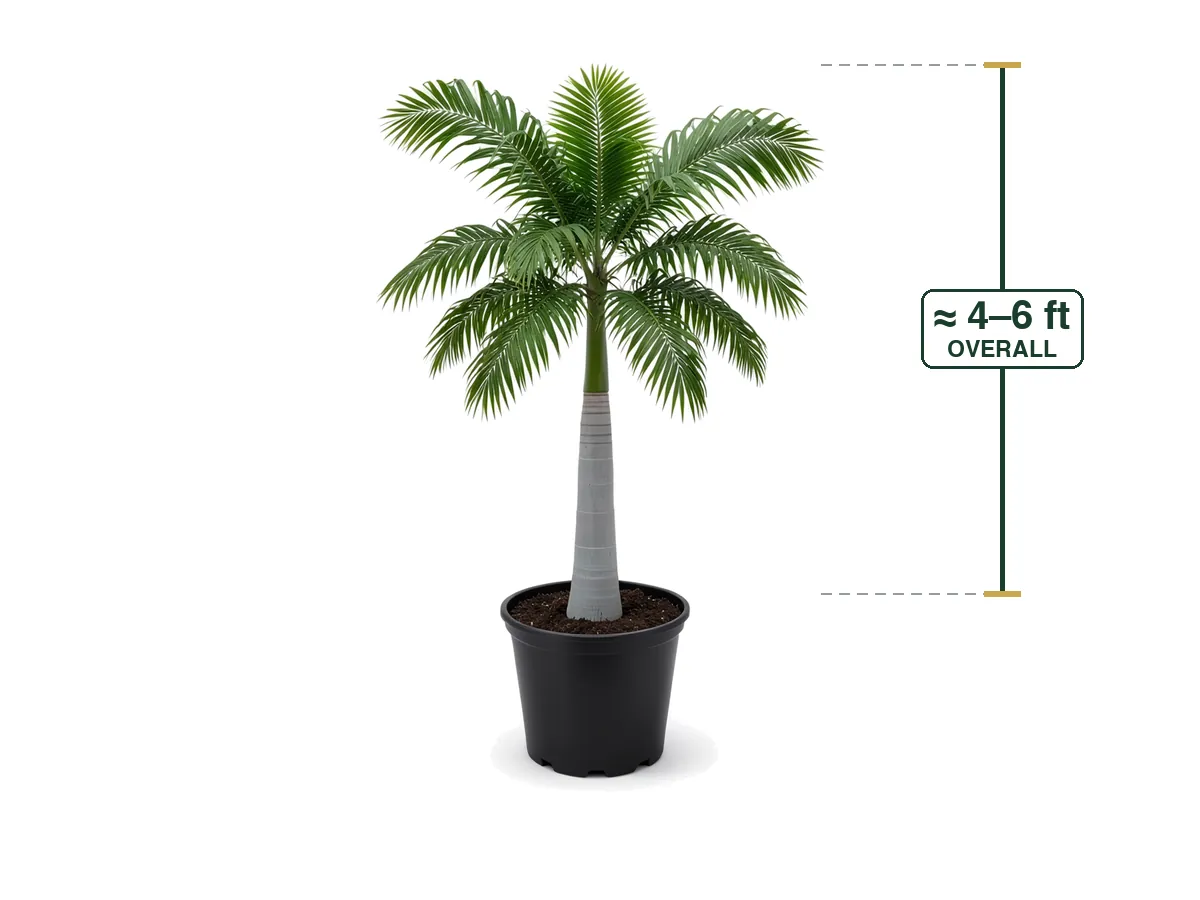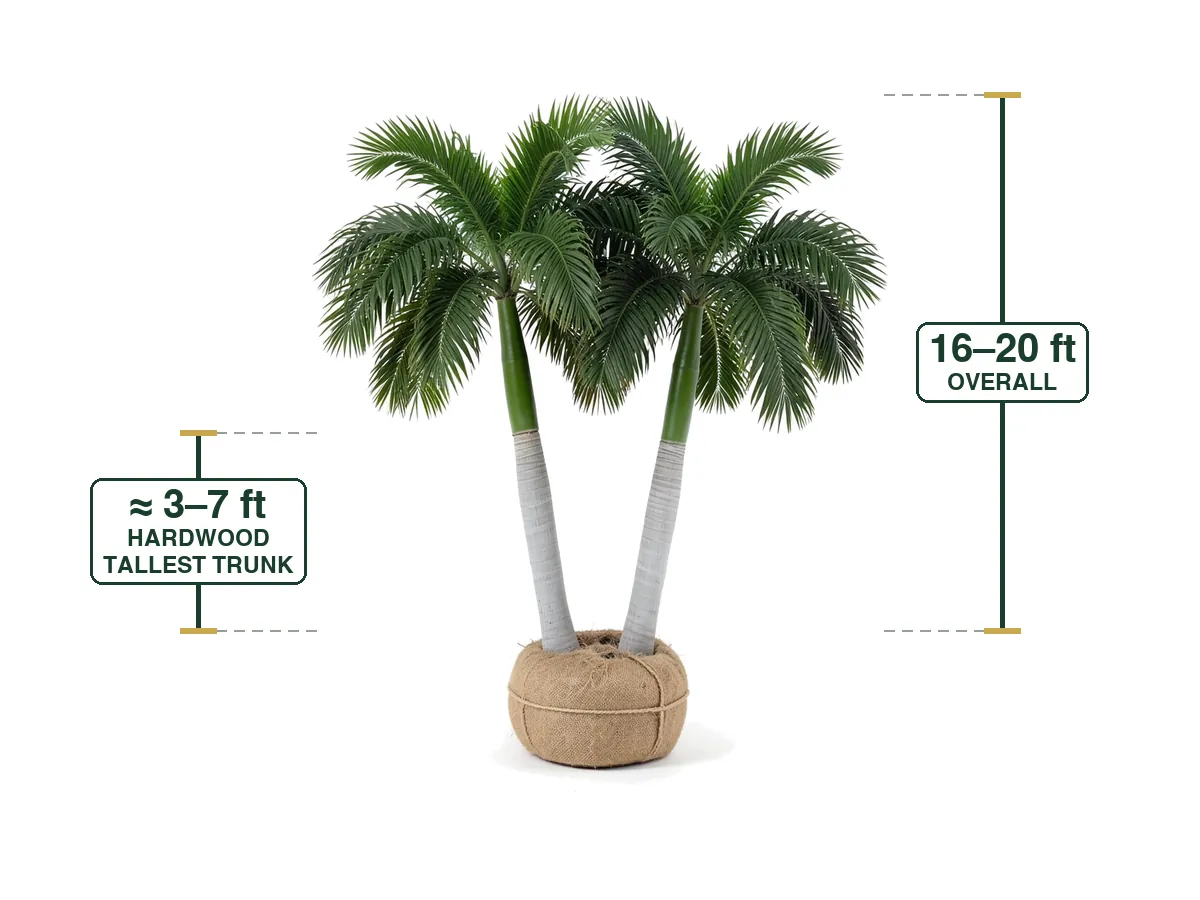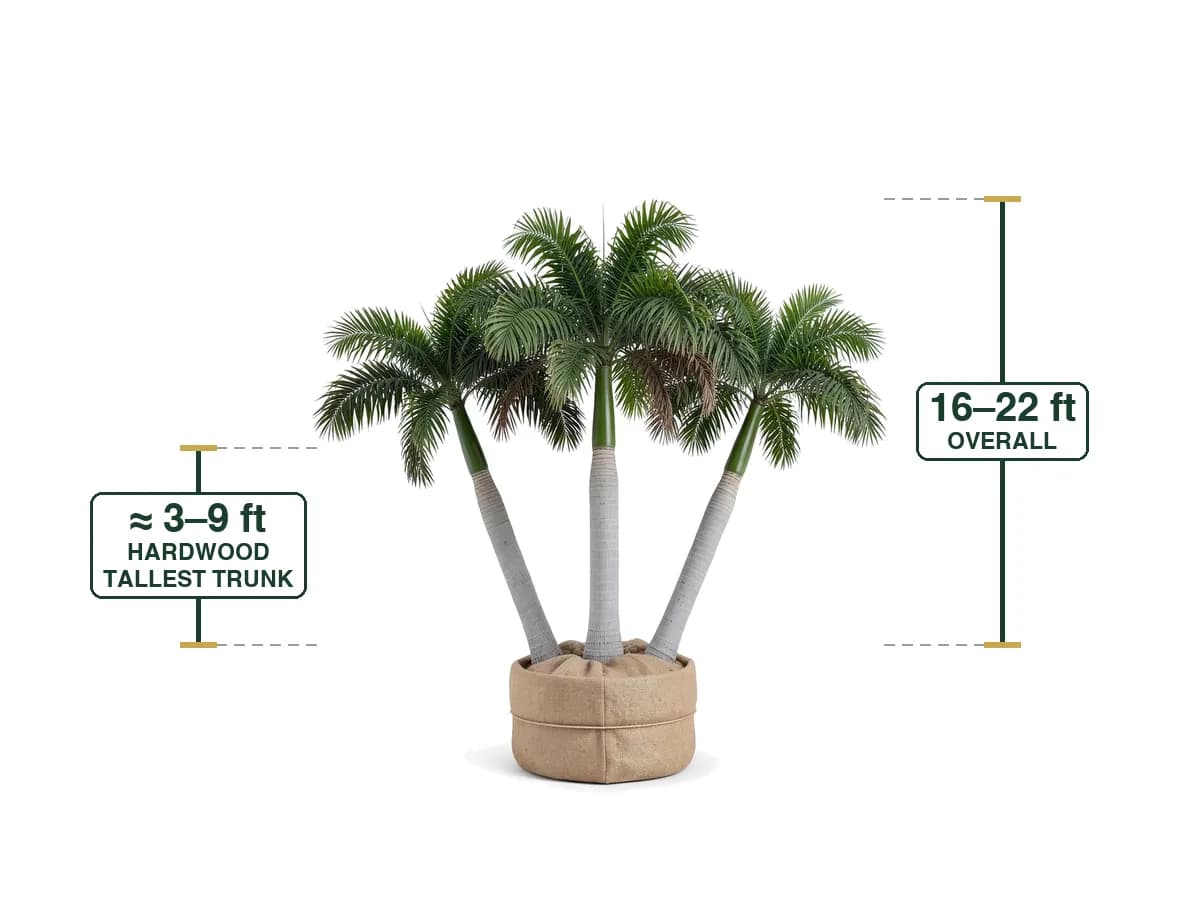
The Royal Palm (Roystonea regia) is one of the most iconic trees in Florida. Its smooth gray trunk, brilliant green crownshaft, and graceful arching fronds define the look of Miami's boulevards, Palm Beach estates, and Naples communities. Here is everything you need to know about growing and caring for Royal Palms in Florida.
Royal Palm Quick Facts
- ✓Mature height: 60-80 feet
- ✓Growth rate: Moderate, 1-2 feet per year once established
- ✓Cold hardiness: Zone 10a-11 (damaged below 30°F)
- ✓Salt tolerance: Moderate
- ✓Light: Full sun
- ✓Self-cleaning: Yes, old fronds drop cleanly from the crownshaft
- ✓Hurricane resistance: Excellent, flexible trunk withstands high winds
Planting a Royal Palm
Royal Palms need space, lots of it. Plant at least 15-20 feet from structures, power lines, and other large palms. The root system spreads 20-30 feet wide, and falling fronds (which are large and heavy) can damage anything underneath. Dig the hole twice the width of the root ball but only as deep as the root ball. Never bury the trunk, the root initiation zone must remain at soil level.
Watering Requirements
- ✓Newly planted: Water daily for the first 3 months, then 3 times per week for months 4-6
- ✓Established trees: Supplemental water during dry season (November-May) is beneficial
- ✓Royal Palms are moderately drought tolerant once established but grow faster with regular water
- ✓Avoid overwatering, standing water around the base promotes root rot
Fertilizing Royal Palms
Royal Palms are heavy feeders and respond dramatically to proper fertilization. Use a palm-specific fertilizer with the formula 8-2-12 plus micronutrients (magnesium, manganese, boron, and iron). Apply 3 times per year: March, June, and September.
Fertilizer Tip: Spread the fertilizer evenly under the entire canopy, not just around the trunk. Royal Palm roots extend well beyond the frond drip line. For a mature palm, use 10-15 pounds of palm fertilizer per application.
Common Royal Palm Problems
- ✓Potassium deficiency: Yellowing and browning of older fronds, most common nutritional issue in Florida's sandy soils
- ✓Manganese deficiency: New fronds emerge small, distorted, or yellowed, "frizzle top"
- ✓Ganoderma butt rot: Fatal fungal disease, causes trunk softening at the base with a shelf fungus. No cure.
- ✓Royal Palm bug: Small insect that feeds on new fronds causing yellow spotting, treat with systemic insecticide
- ✓Cold damage: Fronds turn brown after freezes, do not cut them until new growth emerges in spring
Pruning and Maintenance
Royal Palms are self-cleaning, so routine pruning is unnecessary. Old fronds fall naturally from the crownshaft. However, you may want to remove hanging dead fronds for aesthetic reasons. Never remove green fronds, this deprives the palm of nutrients and slows growth.
Looking for Royal Palms for your Florida property? Florida Palm and Plant Co. carries field-grown Royal Palms in multiple sizes. Call (239) 799-5594 for current availability.