A new build in Brandon, Riverview, Valrico or FishHawk comes with builder's sod, two or three builder's shrubs and, in most communities, a requirement for at least one canopy tree in the front yard. That tree is the single most important plant decision on the lot, because it is the one you cannot easily undo in ten years. Here is how live oak, southern magnolia and crape myrtle compare, and where each belongs.
Start with the lot, not the tree
New-build lots in Hillsborough County share the same conditions: compacted fill under a thin layer of topsoil, a drainage swale along the side or rear line, utility lines and easements along the front, and a house that takes up most of a 50- to 60-foot-wide lot. Before you fall in love with a tree, find the easements on your survey, call 811 to have utilities marked before anyone digs, and measure how far the planting spot is from the driveway, the sidewalk, the foundation and the neighbor's roofline. Mature spread decides the tree, not the size in the pot.
Live oak: the tree you plant for the next owner
The live oak is Florida's canopy tree. It grows 40 to 60 feet tall with a spread that can pass 60 feet, it is one of the most wind-resistant trees in the state, it lives for centuries, and it is on the approved list of nearly every HOA in Riverview and Brandon. It is also the tree most often planted in the wrong spot. Live oak roots run near the surface and will lift a driveway or sidewalk planted within reach, and the canopy eventually covers the whole front yard, which is either the goal or the problem depending on how you feel about grass.
Give it a spot at least 15 to 20 feet from the driveway, walks and foundation, in the front corner of the lot or centered in a large front lawn, and it will pay you back with cooler afternoons and a real drop in summer cooling costs. In a typical Florida yard with water, a 15-gallon or 25-gallon live oak can add a couple of feet a year, and it needs structural pruning in its first ten years so it develops one strong leader instead of several competing trunks.
Southern magnolia: evergreen, fragrant and heavier than it looks
The southern magnolia gives you dense evergreen shade, huge white flowers in late spring and early summer, and a formal look that suits a two-story elevation. It grows 30 to 50 feet in our area with a 20- to 30-foot spread, it holds up in wind reasonably well, and its roots are far better behaved near hardscape than a live oak's.
The honest downside is litter. A magnolia drops big, leathery leaves all year and seed cones in fall, and grass under a mature one struggles in the shade. Plant it where the leaves can fall into a mulched bed rather than the lawn or the pool. For a standard lot, the cultivars are the answer: 'Little Gem' stays around 20 to 25 feet and blooms young, while 'D.D. Blanchard' and 'Bracken's Brown Beauty' give a full-size tree with a tighter shape and a bronze underside on the leaves.
Crape myrtle: the flowering tree, not the shade tree
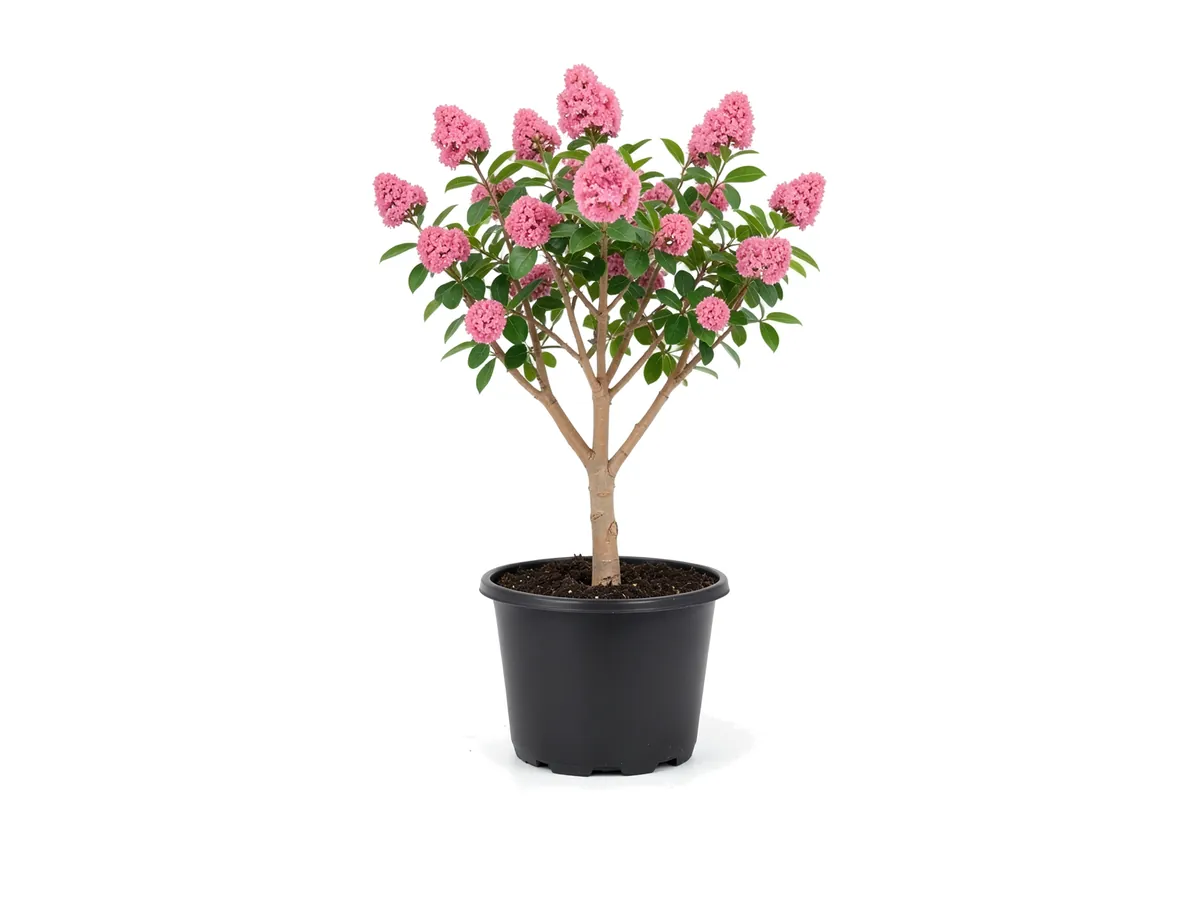
The crape myrtle is the best small flowering tree for Tampa Bay, with three months of summer bloom, smooth peeling bark and a little fall color, and it is cold hardy far beyond anything Brandon sees. It will shade a patio corner or a driveway edge. It will not shade a house. Most cultivars top out between 10 and 25 feet, so if your HOA requires a canopy tree, a crape myrtle usually does not satisfy it.
Choose by mature size instead of flower color, because a 25-foot 'Natchez' in a spot meant for a 10-foot 'Tonto' becomes the chainsaw victim you see all over Tampa every February. Never top a crape myrtle; it ruins the structure and the bloom. Pick a mildew-resistant cultivar, give it full sun, and expect some aphids and sooty mold in humid summers.
The comparison in one place
- ✓Shade for the house: live oak, then magnolia. Crape myrtle no.
- ✓Best near driveways and walks: crape myrtle, then magnolia. Live oak no.
- ✓Wind resistance: live oak best, magnolia good, crape myrtle good for its size.
- ✓Litter: magnolia the most, live oak a spring leaf drop and pollen, crape myrtle spent flowers and seed pods.
- ✓Lot size: live oak wants a big front yard; magnolia fits most lots with the right cultivar; crape myrtle fits anywhere.
- ✓HOA canopy requirement: live oak and full-size magnolia satisfy it; check on 'Little Gem'; crape myrtle usually does not.
Other trees worth a look
For a wet swale, bald cypress is the right tree. For a fast evergreen screen, East Palatka holly and Japanese blueberry. For a deciduous shade tree with fall color, Shumard oak. Skip laurel oak and water oak, which grow fast, rot early and fail in storms, and skip anything on the invasive lists.
What shade trees cost delivered and planted
Trees are quoted by container size and height, delivered and planted, with staking and the first watering included. Every order has a $500 minimum, and Hillsborough County addresses carry a trip charge that we quote by county. Prices may differ, so request a quote for your exact number. A 15-gallon tree is the sweet spot for most new builds: large enough to look intentional, small enough to establish fast and catch a bigger tree within a few years.
Plant it once, with the Tampa Bay team
Our Tampa Bay crew plants trees across Riverview, Brandon, Valrico, Apollo Beach and the rest of Hillsborough County, and we will tell you if the spot you picked is too close to the driveway before we dig. Send a photo of the front yard with the survey if you have it, or call (239) 799-5594 or text (239) 763-0625 for a delivered-and-planted quote.