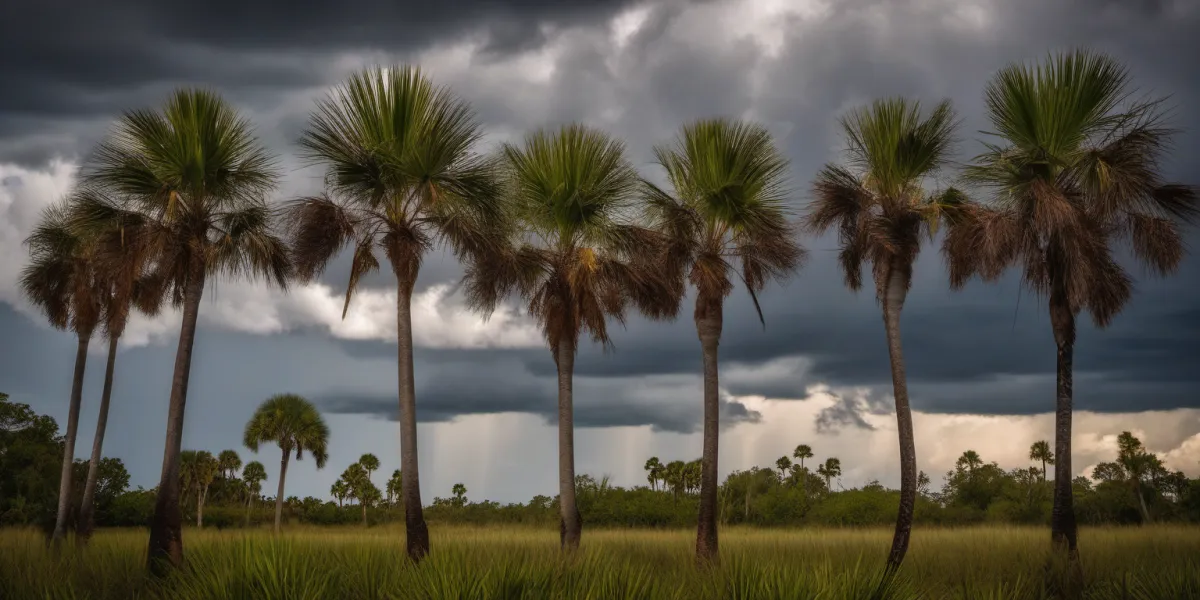
Waterfront yards in St. Petersburg and Clearwater Beach deal with salt three ways: spray carried on the wind, salty groundwater under the lawn, and, as the last few storm seasons proved, storm surge that soaks everything for hours. Plants that handle all three exist, and most of them are natives that were here before the seawalls. Here is the list we plant on the water, and the ones we leave in the truck.
Understand which salt you have
Salt spray hits the side of the plant facing the water and burns leaf edges brown. Salty soil and groundwater affect the roots and show up as general yellowing and slow growth even on the sheltered side. Surge flooding is the worst case: a lawn and beds sitting under bay water for a day. Most St. Augustine grass and many shrubs die from that, and the recovery step is the same for any of them: flush the soil with fresh water, as much and as soon as you can, to push the salt down below the root zone before replanting.
Palms for the water
- ✓Sabal palm. Native, highly salt tolerant, hurricane proof, and hardy to cold well beyond anything the coast sees.
- ✓Pindo palm. Salt tolerant, cold hardy, and small enough for a seawall-side bed.
- ✓Sylvester and Canary Island date palms. Both take salt spray and wind well, and both are hardy for the coast.
- ✓Washingtonia palm. Salt tolerant and fast. Give it room to become a tall column.
- ✓Coconut, foxtail and royal palms grow on the water in Pinellas in the good years and are set back hard in the cold ones. Plant them knowing that.
Shrubs and hedges that take spray
- ✓Sea grape. The classic beachfront screen, with big round leaves and true salt tolerance. It can be cold-damaged inland, but on the water in St. Pete and Clearwater Beach it is reliable.
- ✓Silver buttonwood. Silvery foliage, salt tolerant, wind tolerant, prunable into a hedge. Marginal in a hard freeze, so keep it near the water.
- ✓Clusia. Thick, waxy leaves that ignore salt, and fine on the coast where winter lows stay above freezing. Inland, choose something hardier.
- ✓Yaupon holly. A native evergreen with high salt tolerance and real cold hardiness. Dwarf forms make a tidy low hedge; the tree form makes a screen.
- ✓Wax myrtle. Native, fast, salt tolerant, hardy, and happy in wet spots. Loose and informal.
- ✓Pittosporum. Tough, evergreen, salt and cold hardy, in green and variegated forms.
- ✓Oleander. Handles salt and drought, blooms all summer, hardy. Every part is poisonous, so skip it where kids or dogs chew on plants.
- ✓Simpson's stopper. A native with small glossy leaves, white flowers and red berries, moderate salt tolerance, and good cold tolerance for the coast.
Grasses, groundcovers and color
- ✓Muhly grass. Pink plumes every fall, native, drought and salt tolerant. Plant it in drifts.
- ✓Fakahatchee grass. Big, arching, native, and fine with salt and flooding.
- ✓Dune sunflower. A native groundcover that blooms yellow year-round on a dry, sandy bank.
- ✓Sea oxeye daisy. The native that grows right up to the seawall and blooms yellow through the year.
- ✓Coontie. A native cycad with high salt tolerance and cold hardiness, and the host plant for the atala butterfly.
- ✓Railroad vine and beach elder for stabilizing sand.
- ✓Bougainvillea takes spray and drought and gives the most color per plant on the coast, with some burn in the coldest winters.
Trees for a bay-front lot
Live oak is the surprising winner. It has high salt tolerance, it survives surge better than most trees, and it anchors a waterfront lot in Snell Isle or Belleair for a century. Southern red cedar is a native evergreen that handles salt and wind. Gumbo limbo grows in the warmest waterfront spots in south Pinellas but is a cold gamble anywhere else.
What to leave off the list
Crotons, ixora, hibiscus, most gardenias, queen palms and areca palms all struggle with direct salt spray and salty groundwater. They will grow behind the house, on the sheltered side, with fresh irrigation water. They will not thrive on the seawall.
After a surge: the recovery sequence
If your yard sat under bay water, do not replant the week after. Flush the beds and lawn with fresh water repeatedly over the first two weeks to move salt down and out of the root zone. Skip fertilizer, which adds more salts. Give shrubs and palms three to four weeks to show whether they are pushing new growth before you pull anything; sea grape, buttonwood and clusia often defoliate and then leaf back out. Cut dead wood back to live tissue once new growth shows you where it is. Replace turf last, after a flush and a soil check, because sod laid on salty ground fails again.
Design notes for waterfront beds
Keep the toughest plants in the first row facing the water and use them as a windbreak for everything behind. Mulch heavily, because salt-affected sand dries fast. Irrigate with fresh water rather than well water when you can, because shallow wells near the bay are often brackish. And raise beds a few inches where the lot floods, so roots sit above the water table.
Pricing for a coastal planting
Shrubs and groundcovers are priced delivered and planted at about $25 per 3-gallon, $50 per 7-gallon and $110 per 15-gallon, with volume pricing at 50 and 100 plants. Palms and trees are quoted by size. Every order has a $500 minimum, and Pinellas County addresses carry a trip charge that we quote by county. Prices may differ, so request a quote for your exact number.
Plant the waterfront with the Tampa Bay team
Our Tampa Bay crew plants coastal yards from St. Petersburg and Gulfport up through Clearwater, Belleair and Dunedin, and across the bridge on Anna Maria Island. Send photos of the seawall side of your yard through our quote form, or call (239) 799-5594, and we will build a salt-proof plant list with a delivered-and-planted price.