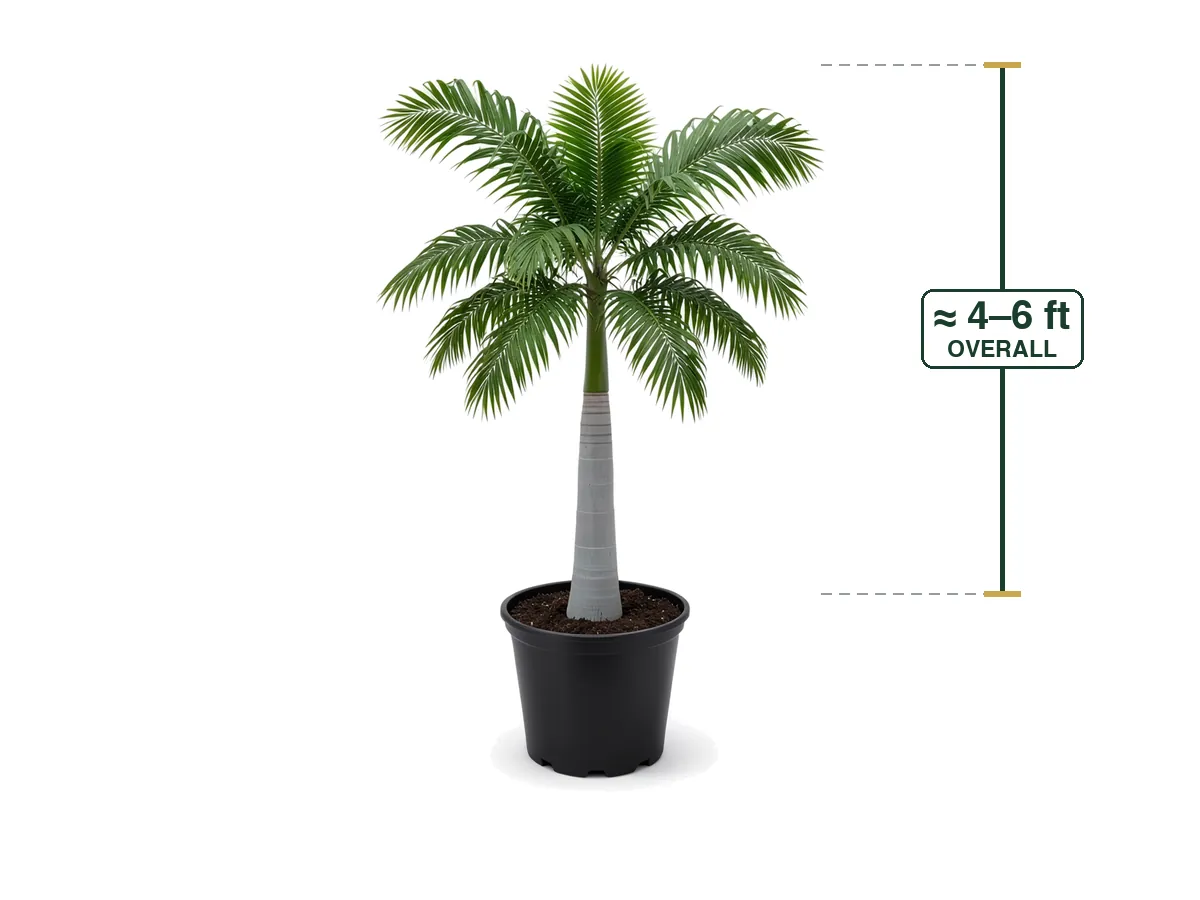
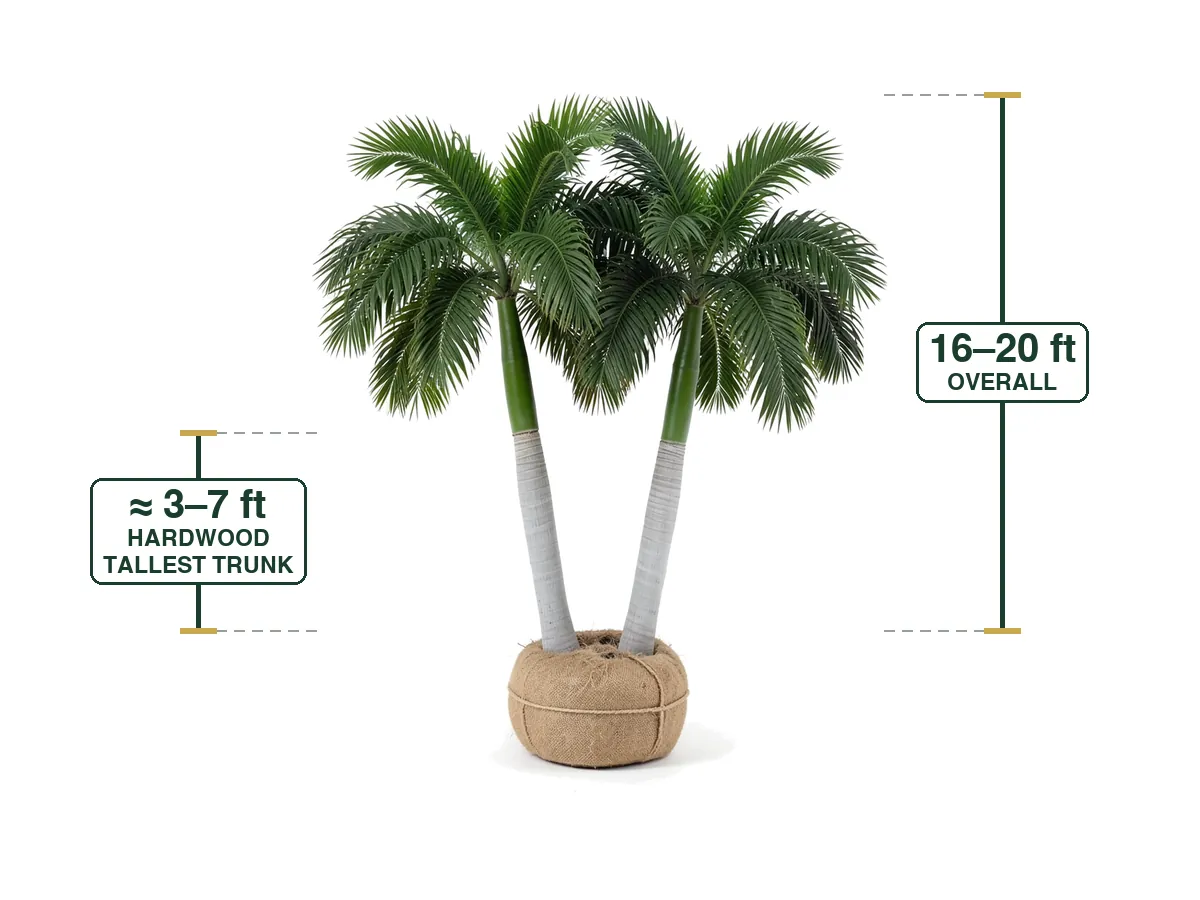
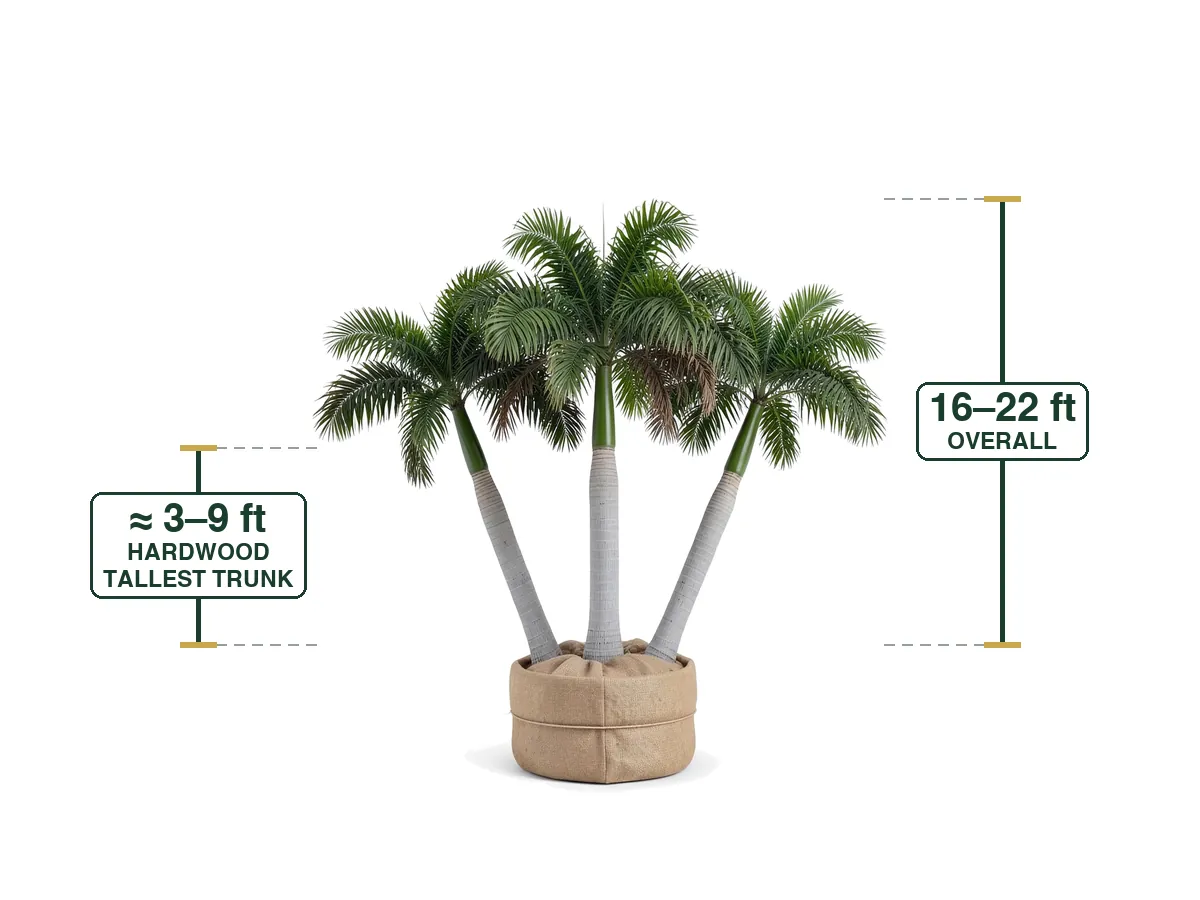
November is an ideal time to plant palms and trees in Marco Island, offering cooler temperatures and a window of opportunity before the dry season sets in. Royal palms, with their elegant appearance and resilience, are a popular choice for homeowners looking to enhance their landscape.
Soil Preparation for Royal Palms
Proper soil preparation is essential for the health of royal palms. These palms thrive in well-draining soil, which prevents root rot and ensures nutrient uptake. In Marco Island, sandy soils are common, but it's important to avoid heavy clay or overly compacted areas.
- ✓Test your soil pH to ensure it's between 6.0 and 7.5.
- ✓Amend the soil with organic matter, such as compost, to improve drainage and nutrient content.
- ✓Avoid planting in low-lying areas where water can pool.
Salt Tolerance and Coastal Considerations
Marco Island's proximity to the Gulf of Mexico means that salt spray can impact plant health. Royal palms are moderately salt-tolerant, but they benefit from some protection in coastal areas.
- ✓Plant royal palms at least 20 to 30 feet away from the beach or saltwater exposure.
- ✓Use windbreaks like shrubs or fences to reduce salt spray.
- ✓Water regularly during the first few months after planting to help the palm establish itself.
Heat and Sun Exposure
While royal palms can tolerate full sun, they may require some protection during the hottest parts of the day, especially when young. In Marco Island, the sun can be intense, so it's important to consider planting locations carefully.
- ✓Choose planting sites that receive morning sun and afternoon shade.
- ✓Avoid planting near reflective surfaces like concrete or light-colored pavement that can increase heat stress.
- ✓Mulch around the base of the palm to help retain moisture and regulate soil temperature.
Rainy and Dry Season Considerations
Understanding the seasonal climate patterns in Marco Island can help ensure the long-term success of your royal palm. The rainy season typically runs from June to November, while the dry season begins in December and continues through May.
- ✓Planting in November takes advantage of the transition period, allowing the palm to establish roots before the dry season.
- ✓During the dry season, water royal palms deeply but infrequently to encourage deep root growth.
- ✓Avoid overwatering during the rainy season, as this can lead to root rot.
HOA Rules and Local Regulations
Homeowners in Marco Island often live in neighborhoods with Homeowners Associations (HOAs) that have specific rules about landscaping. It's important to review these guidelines before planting a royal palm.
- ✓Check with your HOA for any restrictions on palm height, species, or placement.
- ✓Some HOAs may require permits for large trees or palms.
- ✓If in doubt, contact your HOA or local Lee County officials for guidance.
Lee County Norms and Best Practices
Lee County has established norms and best practices for planting trees and palms, especially in urban and coastal areas. These guidelines help protect both the environment and property values.
- ✓Follow Lee County's planting guidelines for tree and palm placement.
- ✓Ensure that the palm's root system has enough space to grow without interfering with sidewalks, driveways, or utility lines.
- ✓Consider the mature size of the royal palm when selecting a planting location.
If you're ready to enhance your Marco Island landscape with a royal palm, learn more about royal palm installation pricing or explore our royal palm product page. For a customized plan tailored to your property, request a quote today. Call (239) 799-5594 or text (239) 763-0625 to speak with a local expert.
Soil Preparation and Drainage in SW Florida
Proper soil preparation is essential for the health of royal palms in Marco Island. While these palms can adapt to a range of soil types, they thrive best in well-draining, sandy soils that are slightly acidic to neutral. Avoid heavy clay soils that retain too much moisture, as this can lead to root rot. Before planting, test the soil to ensure it has adequate drainage and aeration. If necessary, amend the soil with organic matter like compost or peat moss to improve its structure. Raised planting beds can also be beneficial in areas with poor drainage. Additionally, ensure that the planting site is not in a low-lying area prone to water pooling, as excess moisture can be detrimental to the palm's root system. Taking these steps will help your royal palm establish a strong foundation and grow healthy for years to come.
Pest and Disease Management in SW Florida
Royal palms in Marco Island can be susceptible to certain pests and diseases common to the Southwest Florida climate. One common issue is the presence of palm weevils, which can cause significant damage to the trunk and crown of the palm. Regular inspections are key to early detection - look for signs such as yellowing fronds, wilting, or spongy areas on the trunk. Another concern is fungal infections, which can occur in overly wet conditions or poor air circulation. To prevent these issues, avoid overwatering and ensure that the planting site has good airflow. Prune dead or damaged fronds regularly to reduce the risk of disease spread. Using organic mulch around the base of the palm can also help deter pests and improve soil health. Staying proactive with maintenance and monitoring can help keep your royal palm healthy and thriving in the unique conditions of Marco Island.
Related Reading From Palm and Plant Co
- ✓Royal Palms in North Fort Myers
- ✓Royal Palms in Lehigh Acres
- ✓Royal Palms in Cape Coral
- ✓Royal Palms in Fort Myers: A Homeowner\
- ✓Royal Palms in Punta Gorda: A Guide for Homeowners